The undying significance of EEAT SEO – The EEAT SEO strategy gives importance to transparent authorship, human-first insights, and credible sourcing over fundamental keyword optimization. Google wants to provide search results that have a sturdy EEAT to shield its users besides offering them the finest experience possible. EEAT is particularly vital when the matter zeroes in on one’s life topics, and these topics affect the well-being of users, like finance, health, safety, and legal matters.
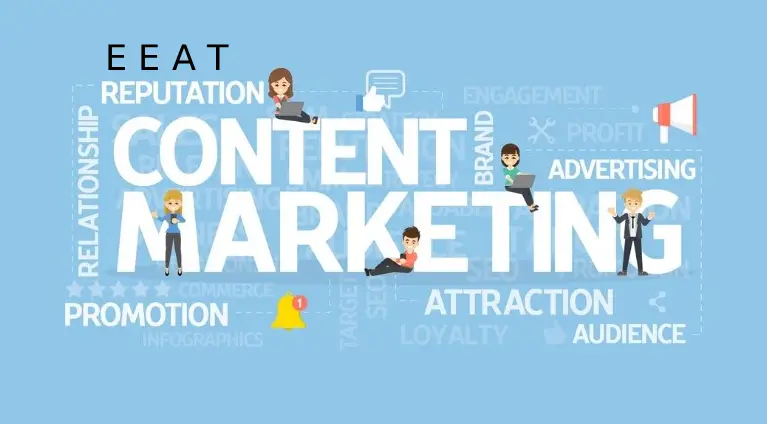
The importance of Google EEAT
Google EEAT is significant for SEO as it assists people in creating quality content, which is likely to perform well in the results on Google. To clarify, EEAT isn’t a confirmed Google ranking factor. Google has also stated that quality rater feedback seems important to enhance its ranking algorithms with time.
When you focus on EEAT, you can align your website with the content that you create with the definition of fine search results of Google. It means when you follow these practices, you can create content that stands a better chance of ranking well in Google.
The helpfulness of EEAT in AEO
Following EEAT guidelines commonly helps with AEO, helpful content, or answer engine optimization. Though Google developed EEAT, it continues to be a relevant framework in this AI era. The work people do to enhance EEAT commonly involves developing topical authority, maintaining current and precise content, and earning high-quality backlinks, and these practices enhance the visibility in AI search.
The components of EEAT
Here is the breakdown of EEAT SEO elements in detail:
Experience
This is something that a person has with the subject matter, and some instances of first-hand experience in content include the following:
- Unique outcomes or data from the personal implementation of the creator.
- First-hand testing notes, video, or original photos from the creator.
- Explicit disclosers that an author has visited, used, or lived through the main subject matter.
Expertise
This refers to a person’s skills, credentials, and knowledge in a specific domain. The expertise level needed to create helpful content is dependent on the topic and purpose of a page. For instance, if medical doctors write and review a health article, then users will trust the information as well as the suggestions provided. Again, LLMs and Google, too, will refer information from this piece. Now, if content is classed as YMYL, then you might not need editors or writers with formal credentials. Nonetheless, you will still be required to demonstrate practical expertise through different methods.
Authoritativeness
This is another important aspect of EEAT SEO. It is referred to as one’s reputation in the form of a dependable source. Google gauges the authoritativeness of a site by looking at its backlink profile. If the backlinks have higher relevance, quality, and quantity, then a site will be considered to be more authoritative.
Trustworthiness
This is informed by experience, expertise, and authoritativeness. However, it is also about shielding visitors from probable harm as well as providing them confidence in their website and the content it has. Hence, all websites must have HTTPS, verifiable and accurate information, and clear contact information. Again, you should be mindful of maintaining steady messaging about a brand on your website and on other places on the web. If your brand has conflicting details, then it can undermine the confidence for search engines, users, and LLMs.
The way to enhance the EEAT of your website
You can improve the Google EEAT of your site by creating quality content, developing your reputation, using editorial standards, using reliable sources, crediting your creators, and depending on UGC or user-generated content.
Some methods that seem helpful are the following:
Always create useful content
You should create helpful content that will be relevant to the problems of your audience. This way, you can display the expertise of your brand and develop your authority. For instance, REI is a trustworthy outdoor apparel retailer, and it does not sell apparel only but shares lots of important advice on climbing, hiking, camping, etc.
Follow strict editorial standards
You must also follow strict editorial standards, and they should align well with the framework of Google EEAT. This way, you can ensure that everything you have published has been aligning with the recommendations of Google. Always ensure that your content is fact-checked as well as proofread by someone else. Again, you must always form a style guide that will define the writing style that you wish to adopt.
Develop the reputation of your brand
When you develop the reputation of your brand, it will affect the perceived trustworthiness of your site and content. Hence, you must use some tactics, like influencer marketing, digital PR, social media management, guest posting, and link building.
Credit the creators of your content
When you credit the creators of your content, you will develop trust with readers. If your writers lack the required knowledge to create helpful content on your selected topic, you can ask other members of your team to make their contribution. Again, you can also think of seeking outside help on some websites.
Utilize only the credible sources
When you use credible sources, like research reports, then you can ensure that the content you have published is both reliable and accurate and ideal for Google EEAT. It is also a good practice to link to different sources so that your readers know that you have done extensive research and can also verify your claims.
Influence user-generated content
Leveraging UGC created by a platform or website helps a brand to build trust because it proves that you have happy and contented customers. For instance, Amazon displays photos, reviews, and videos from customers. Hence, you too can prompt users to form UGC by sending review request emails to your customers, developing UGC interfaces on your site, and running contests that need users to create content to enter.
Using AI to optimize EEAT
AI technologies are continuously reshaping the internet, and some tools, including ChatGPT, Claude, Gemini, and DeepSeek, are evolving rapidly. As LLMs generate huge amounts of content, it is vital to examine how these technologies do align with the principles of EEAT.
Is AI capable of proving experience?
Since AI lacks real-time experience, it can only stimulate human responses that are formed on training data, and experience is based on emotions, first-hand interaction, and physical engagement, and they are all elements that AI lacks. There are several instances of AI-generated content and EEAT SEO-claimed experiences.
Can AI prove experience?
AI lacks real-life experience, and it only simulates human responses based on training data. Experience is based on first-hand interaction, emotions, and physical engagement—elements AI doesn’t have. There have been several instances where AI-generated content claimed experiences falsely. Though AI can copy human experiences, it severely lacks the capability to possess them.
Conclusion
You can use EEAT SEO to offer the best content experience to hundreds and thousands of users. Google EEAT is important to build credibility and trust in search rankings. Hence, you can consider it a strategy that can bring you quick wins. For the optimization of EEAT, give importance to displaying expertise and firsthand experience, and form an authority with reliable sources. It is important to audit your content steadily and regularly before you refine messages to align with the principles of EEAT and ensure the success of SEO.